What Is a Hapé Ceremony? A Beginner's Guide
A beginner-friendly guide to Hapé ceremony, Indigenous context, intention, basic structure, tepi vs kuripe, and respectful participation.
HAPÉ
Pillars of Light Hapé
9/3/20265 min read

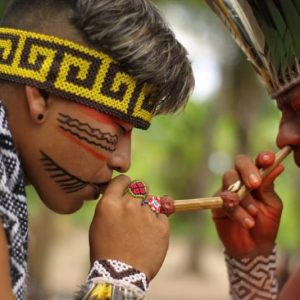
Hapé ceremonies are intentional gatherings centered on prayer, stillness, and the traditional use of Hapé (also written Rapé). For a beginner, the word “ceremony” can sound formal or mysterious. At its heart, however, a Hapé ceremony is a dedicated moment in which the medicine is approached with care rather than used casually.
This guide offers a basic overview of what may happen before, during, and after a ceremony. Practices differ among Indigenous nations, communities, facilitators, and individual practitioners, so it should not be treated as a universal protocol or a substitute for learning directly from qualified tradition holders.
What Is a Hapé Ceremony?
A Hapé ceremony is an intentional setting for receiving Hapé, a finely prepared Amazonian snuff commonly made with Nicotiana rustica tobacco and plant ashes. Some blends also include other botanicals according to the knowledge and methods of the people who prepare them.
Hapé is administered through the nostrils with a special applicator rather than inhaled like smoke. A ceremony may be personal and quiet, shared between two people, or held as part of a larger gathering. What distinguishes ceremonial use is not the size of the group. It is the attitude of attention, responsibility, prayer, and respect brought to the moment.
If you are new to the subject, begin with our What Is Hapé? guide for a general introduction.
Traditional Context and Indigenous Origins
Hapé comes from living Indigenous traditions of the Amazon. Knowledge of plant selection, preparation, prayer, serving, and ceremony has been maintained by different peoples across generations. There is no single Hapé recipe or one ceremony shared by every nation. Each lineage may have its own language, teachings, songs, purposes, and protocols.
A respectful introduction therefore avoids presenting Hapé as a trend, shortcut, or product separated from its cultural roots. It also avoids claiming authority over teachings that belong to specific Indigenous communities. Beginners can show respect by learning about provenance, listening to Indigenous voices, supporting transparent relationships, and acknowledging that a short online guide can only provide general orientation.
What Happens During a Hapé Ceremony?
A ceremony often begins by creating a calm setting. Participants may sit quietly, reduce distractions, and take time to become present. A facilitator may explain the process, ask about consent, and invite each person to form an intention. Depending on the context, the ceremony may include spoken prayer, silence, music, or traditional songs.
The Hapé is then prepared and served through a tepi or kuripe. It is usually applied to both nostrils, one at a time. Afterward, the participant remains seated and attentive while the immediate experience unfolds. The closing may include more silence, prayer, water, conversation, or time for personal reflection.
No two gatherings are exactly alike. A ceremony guided by an Indigenous elder in their community is not the same as a private personal practice, and it is important not to treat them as interchangeable.
The Role of Intention and Prayer
Intention gives the ceremony direction. It may be a simple commitment to listen, give thanks, release distraction, or enter prayer with humility. An intention does not guarantee a particular outcome; it is a way of clarifying how a person wishes to meet the experience.
Prayer may be spoken aloud or held silently. In many ceremonial settings, it helps mark the transition from ordinary activity into focused attention. For beginners, prayer does not need to be elaborate. Sincerity, patience, and respect matter more than special wording.
A Basic Ceremony Structure
Preparation
Preparation includes choosing a quiet, appropriate space and allowing enough time so the ceremony does not feel rushed. The participant learns what will happen, asks questions, and gives clear consent before receiving anything. The blend and tools are handled carefully, and the facilitator or practitioner prepares the amount to be served.
Because many Hapé blends contain potent tobacco and nicotine, they are not appropriate for everyone and can carry risks. Anyone who is uncertain about personal health considerations should speak with a qualified healthcare professional before use. Hapé should also be kept away from children and treated as a substance that can lead to nicotine dependence.
Application
During application, the participant sits upright and receives the Hapé through the nose. A tepi is used when one person serves another; a kuripe is used for self-application. The force, amount, and serving style can vary, which is one reason beginners should avoid guessing or copying advanced practices from social media.
Integration
Integration is the period after application. The participant remains still, notices the breath and body, and allows the experience to settle without immediately reaching for a phone or returning to activity. Journaling, quiet reflection, or a simple conversation may help the person understand what arose. Integration is not about forcing a meaning; it is about making space to listen.
Tepi vs Kuripe in Ceremony
A tepi is a longer applicator used by a facilitator to serve Hapé to another person. This creates a relational exchange in which trust, consent, and the server's responsibility are especially important.
A kuripe is a V-shaped applicator used for self-administration. It gives the individual control over timing, but it does not remove the need for education, restraint, or respect.
Neither tool is simply a decorative accessory. Both should be kept clean, handled intentionally, and used only with clear understanding. Read our Kuripe vs Tepi guide for a beginner-friendly comparison.
What to Expect During and After
The immediate experience can be intense. A person may notice strong sensations in the nose, eyes watering, salivation, a need to breathe slowly, or temporary nausea and lightheadedness. Reactions vary with the person, blend, amount, and method of serving. A responsible setting allows the participant to remain seated, unhurried, and supported.
Afterward, some people prefer silence while others want to share a few words. It is wise to allow time to settle before driving, working, or making important decisions. Rather than promising a specific physical, emotional, or spiritual result, a respectful guide leaves room for individual experience and recognizes that discomfort or uncertainty can occur.
Approaching the Tradition Respectfully
Respect begins with humility. Learn whose knowledge and preparation you are engaging with. Ask where a blend comes from without inventing or assuming a lineage. Choose guidance that acknowledges Indigenous stewardship, avoids exaggerated promises, and values consent and responsible use.
It is also helpful to remember that purchasing a product does not make someone a ceremonial leader. Serving others carries added responsibility. Beginners should seek education, move slowly, and avoid presenting personal experiences as universal Indigenous teachings.
For those who want a guided introduction, Pillars of Light Hapé has a Hapé Master Class coming up. The class is an opportunity to learn foundational context, tools, and respectful practice in a structured setting; contact Pillars of Light for current details and scheduling.
Continue Learning with Pillars of Light
A Hapé ceremony can be simple, but it should never be careless. Preparation, intention, appropriate application, and integration provide a basic framework, while cultural respect keeps the practice connected to the peoples who have carried this knowledge.
Visit Pillars of Light Hapé to explore educational guides, contact the team for beginner guidance, or visit the Old Town Spring store at 318 Main Street, Suite D, Spring, TX 77373. You can also call (832) 585-1398 to ask about the upcoming Hapé Master Class or learn more about the store's selection of Hapé varieties and ceremonial tools.
Pillars of Light, 318 Main Street, Suite D, Spring, TX 77373
Pillars of light
Orders@pillarsoflight.shop
© 2026. All rights reserved.
Part of the Pillars of Light Plant Medicine Church network.
Privacy Policy
© 2026. All rights reserved.